Luca Schmidt
Welcome to my website!

Department of Computer Science
Maria-von-Linden-Straße 1
3.OG/ Level 5, A-544
Tübingen, Germany
I am a final-year PhD student in the Climate, Energy and Machine Learning Systems and the Methods of Machine Learning research groups at University of Tübingen. I am also part of the International Max Planck Research School for Intelligent Systems (IMPRS).
My research lies at the intersection of Machine Learning and Climate Science. I analyze climate and weather models to better understand local climate change impacts and support decision-making. On the methodological side, I work with generative DL methods, e.g., diffusion models, for statistical downscaling and related climate modeling tasks. Furthermore, I am particularly interested in downstream applications such as wind power forecasting.
From May to October 2025, I joined Rolnick Lab as a visiting researcher at Mila - Quebec Artificial Intelligence Institute in Montréal, Canada.
Feel free to reach out if you are interested in any of these or related topics!
news
| May 02, 2026 | I’ll be at EGU in Vienna, presenting two posters on geographical generalization and climate emulators. |
|---|---|
| Apr 27, 2026 | I’ll be at Climate Informatics in Lausanne! |
| Mar 20, 2026 | ML emulators can reduce the high computational costs of climate models, but using them effectively remains challenging. In our new arXiv preprint, we explore how to bridge the gap between ML and climate science. If you work in either field, we’d be happy to connect. |
| Jan 27, 2026 | Our paper Benchmarking the geographic generalization of deep learning models for precipitation downscaling got published in Scientific Reports. |
| Dec 06, 2025 | I’ll be at EurIPS in Copenhagen. |
selected publications
- arXiv
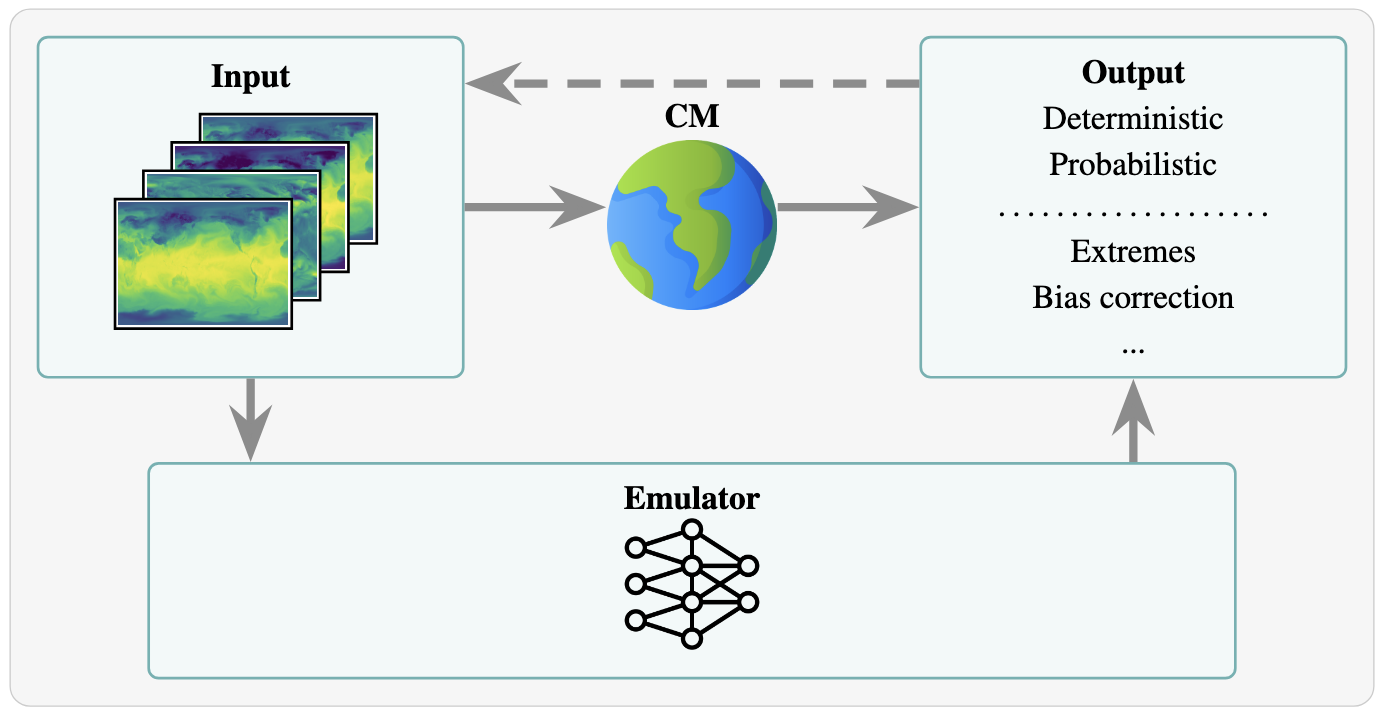 arXiv preprint , Mar 2026
 - Sci. Rep.
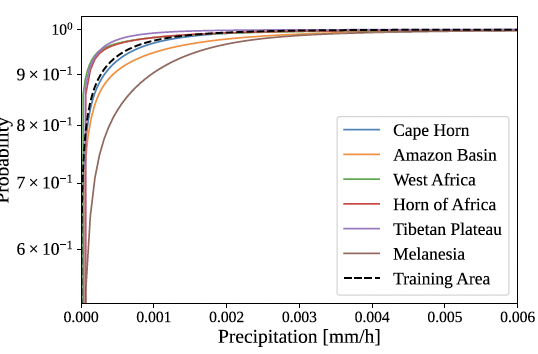 Scientific Reports, Jan 2026
 - ERL
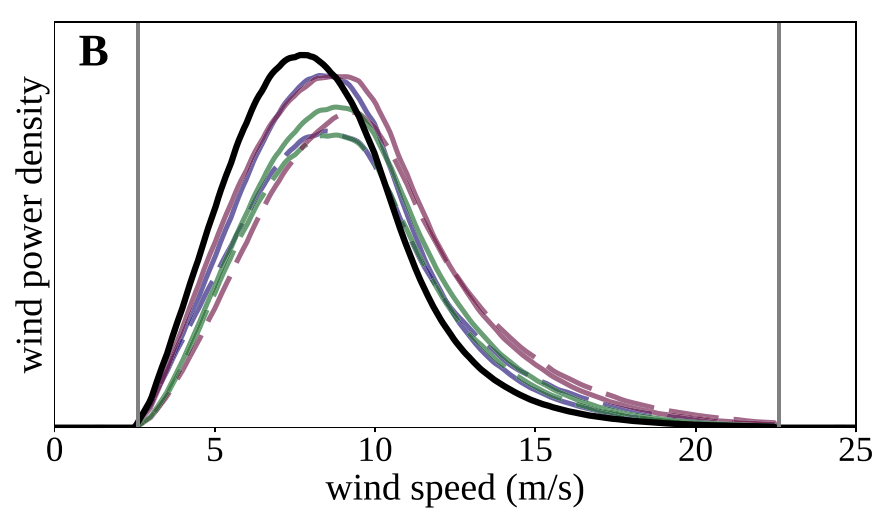 Environmental Research Letters, 2025